



>
Plant-Based Eating
The foods we choose can help reduce emissions and protect the planet.
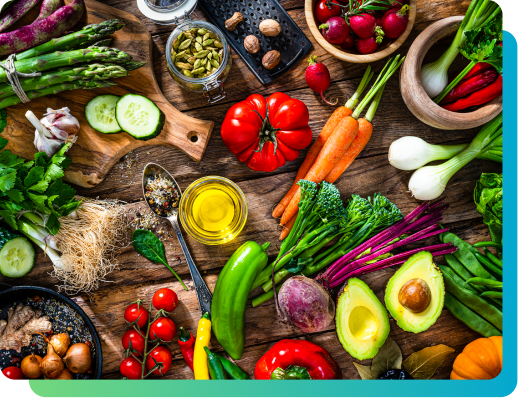
Why Go Plant-Based?
Choosing more plant-based meals is one of the simplest ways to make a positive impact. Every plant-focused meal reduces greenhouse gas emissions, conserves water and land, and supports a healthier, more sustainable food system.
Key Benefits

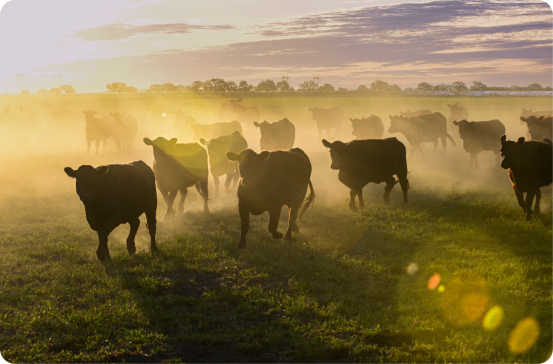
32%
of all methane in the atmosphere is generated from animal agriculture.
More About Going Plant-Based
Explore how shifting toward plant-based meals can help protect ecosystems, conserve resources, and build a healthier community.
The foods we choose can have a significant effect on the planet. Every meal is an opportunity to reduce emissions, save resources, and protect ecosystems. By learning how plant-based choices influence the environment, you can see exactly where your actions make a difference — from the greenhouse gases we produce to the land and water our food requires.
Greenhouse Gas Emissions
Animal agriculture is a major contributor to greenhouse gases, including methane and nitrous oxide. These emissions accelerate climate change and affect ecosystems globally.
Land Use
Raising livestock requires far more land than growing crops for direct human consumption. Studies show that adopting plant-based dietary patterns can reduce diet-related land use by up to ~76% (NIH)
Water Use
Producing animal products consumes significantly more water than plant-based foods. Choosing plants over meat helps conserve this precious resource.
Biodiversity & Ecosystems
Livestock farming drives deforestation, soil degradation, and loss of biodiversity. Shifting toward plant-based foods helps protect wildlife habitats and promotes ecosystem health.
Impact at Scale
Major studies estimate that widespread adoption of plant-based diets could cut greenhouse gas emissions by nearly 50%. Small changes in your diet, when multiplied across a community, can have a substantial environmental effect.
Choosing Lower-impact Proteins
Every food we eat has its own environmental footprint, and protein sources can vary widely in their climate impact. As the chart below shows, some proteins — especially plant-based options — produce far fewer greenhouse gas emissions than others.


You don’t have to change everything overnight — small steps add up. Even simple swaps or trying one plant-based meal a few times a week can reduce your impact and support local farms. Here are some things you could consider:
- Replace beef burgers with veggie burgers, especially ones made from whole foods such as beans and grains
- Experiment with plant-based milks (soy milk is most similar to dairy milk in nutritional content)
- Try tofu, seitan, or tempeh instead of meat in stir fry and pasta dishes
- Use an inexpensive egg replacer (such as from Bob’s Red Mill) in place of eggs in baked goods
- Add lentils, hummus, chickpeas, black beans, or kidney beans to your salads for a healthy protein boost
- Experiment with vegan cheeses (it is often overlooked that dairy cheese generates more greenhouse gasses than chicken, pork, fish, or eggs)
- Explore plant-based recipes online – you might be surprised at what you find!
Small, achievable changes like these can make a big difference over time and make adopting a plant-based lifestyle both approachable and enjoyable.
Not sure where to start? Learn about our Plant-Based Coaching Program or Talk with a Plant-Based Coach.
Following are a handful of websites with excellent plant-based recipes. You can easily find additional plant-based recipes online with simple search criteria.
Below is a list of some of our favorite plant-based cookbooks. This is just a sampling, as there are many excellent plant-based/vegan cookbooks.
Books on the environmental impacts of animal agriculture.
- Food Is Climate: A Response to Al Gore, Bill Gates, Paul Hawken, and the Conventional Narrative on Climate Change, by Glen Merzer and Gary Tiedemann
- Regenesis: Feeding the World Without Devouring the Planet, by George Monbiot
- Food Fix: How to Save Our Health, Our Economy, Our Communities, and Our Planet–One Bite at a Time, by Dr. Mark Hyman
- We Are Eating the Earth: The Race to Fix Our Food System and Save Our Climate, by Michael Grunwald
Movies covering the benefits of a plant-based diet and the negative environmental impacts of animal agriculture.
- Eating for Tomorrow
- Food, Inc.
- Milked
- Cowspiracy
- Seaspiracy
- Forks Over Knives (regarding nutrition)
- The Game Changers (regarding nutrition for athletes)
The following restaurants offer plant-based (vegan) options. While many restaurants will accommodate requests, we are only listing below those restaurants that provide a vegan-specific menu or have at least 3 plant-based main meals on their menu.
- Baramor
- Coconut Newton
- Fuji
- House of Tandoor (separate vegan menu)
- Inna’s Kitchen
- Just Salad
- Olivia’s Bistro (separate vegan menu)
- Pressed Cafe (separate vegan menu)
- Season 52
- Shiva’s Kitchen
- Boston Vegan (not a restaurant but offers frozen plant-based products for purchase, open twice per week)
Send an email if you are aware of other Newton restaurants that meet the criteria and should be added to this list.
The Green Newton Plant-Based Coaching program is a free service for anyone interested in learning more about the impacts of our food choices on sustainability and our climate, looking for plant-based recipe ideas or shopping guidance, or just has a question.
Have questions? Contact a Plant-Based Coach.
- The UU Plant-Based Eating Club, hosts three potlucks a year at the First Unitarian Universalist Society in Newton (FUUSN). Members of the public are welcome to attend.
- The Boston Vegetarian Society hosts the Boston Veg Food Fest in the fall, with a vegan marketplace, speakers, cooking dems, and activities for kids.
Are you interested in helping our community make more plant-based food choices at school, at home, and in local restaurants?
Do you want to connect with others who care about healthy, environmentally-friendly eating?
Get involved with Green Newton’s Green Plate Committee and help reduce greenhouse gas emissions while supporting residents, restaurants, and students in expanding plant-based meal options. Contact us to:
- support local restaurants and businesses interested in expanding plant-based menu options,
- advocate for healthier plant-based choices in school cafeterias, and
- help spread plant-based eating to more residents.
Get local climate news, action and events
Sign Up for Green Newton’s e-newsletter
"*" indicates required fields