



You may have noticed trees with distinctive, deeply furrowed, spongy-looking bark in Cold Spring Park. Those are Amur cork trees (Phellodendron amurense), a native of eastern Asia. It was brought here as an ornamental, but has since escaped to invade natural areas across the Northeast. The cork trees in the park have most likely spread from four planted in the cemetery and arboretum across Beacon Street. If their spread is not reversed, they will permanently alter and dominate the park’s ecosystem, especially the wetland, severely degrading its value to wildlife.
To safely remove the cork trees by the Cold Spring Loop trail, most of the trail will be closed for at least August 17-20 and from August 24-26. The trails may have to be closed each weekday for both weeks.
The dog park is likely to be closed on August 26 to remove four trees between the dog park and the trail on the west side.
Exception: The trail along the east (aqueduct) side from the Beacon Street entrance to Plymouth Road should be able to remain open during the entire period. From Plymouth Road to the dog park and the dog park itself should be able to remain open except for the one day we expect the dog park to be closed—August 26.
Any changes will be posted at park entrances.
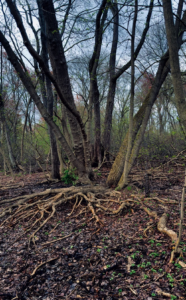
The cork trees (which don’t actually produce cork) are now growing and spreading rapidly throughout the park, especially in the red maple forest/swamp, frequently growing as large multi-stemmed colonies.
New trunks sprout from long tangled roots. One remarkable colony in the center contains more than 200 stems! The tree can also produce up to 500,000 berries a year, spread by birds across considerable distances. They cast dense shade that crowds out native wildflowers, shrubs, and tree seedlings. Their roots emit a chemical, berberine, that acts as a natural herbicide, killing understory vegetation and preventing new plant germination.
Unlike our native red maples and oaks, which support hundreds of caterpillar species (essential for raising baby birds), the cork tree’s strong chemical defenses also deter native wildlife from feeding on their leaves or bark. Their sweet berries attract birds in the fall, but are junk food that does not provide the nutrients birds need to over-winter or migrate. (Also true of invasive understory shrubs in the wetland.) They also harm the health of the brook and its wildlife.