



>
Sustainable Gardening
Join your neighbors in creating greener, healthier yards. Simple changes in how we garden can protect pollinators, conserve water, and make Newton’s neighborhoods more sustainable.
What is Sustainable Gardening?
Sustainable gardening is the idea that you can make earth-friendly choices with your outside spaces and make the most of the natural resources and existing materials you have at hand.
Key Benefits

The numbers of North American bumblebees have fallen nearly 50 percent since 1974.
How to Garden Sustainably
Ready to make your outdoor space greener and more resilient? Start with these sustainable gardening tips.
Bees, butterflies, and other pollinators are essential for maintaining our food supply and keeping ecosystems in balance. By growing more pollen-rich plants, we can give these vital species the food and habitat they need to thrive — right in our own backyards.
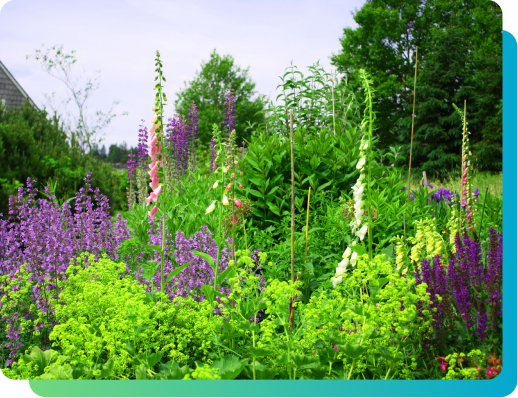
Replacing parts of traditional lawns with native grasses, wildflowers, and shrubs creates a healthier landscape that supports pollinators and local wildlife. Native plants are naturally adapted to New England’s climate, meaning they require less water, fertilizer, and maintenance. Even small patches of milkweed, coneflowers, or goldenrod can make a big difference for biodiversity.
To find plants that naturally thrive in New England’s landscapes, visit The Native Plant Trust — the nation’s first plant conservation organization and the only one solely focused on our region’s native flora.
Before reaching for chemical fertilizers or pesticides in search of the perfect lawn, take a moment to consider their impact. Many conventional lawn products contain toxins that can harm children, pets, pollinators, and the environment we all share.
Integrated Pest Management (IPM) offers a safer, science-based alternative — one that works with nature instead of against it. By focusing on prevention, soil health, and ecological balance, IPM helps create lawns that are naturally beautiful, resilient, and sustainable.
Here are a few ways to get started:
- Diversify your lawn. Mix in clover, native flowers, or groundcovers for a more vibrant, pest-resistant yard.
- Skip synthetic fertilizers. Opt for organic or slow-release options that nourish the soil and protect biodiversity.
- Feed your soil. Add compost or organic matter to build nutrients and encourage deep, healthy roots.
- Avoid broad-spectrum pesticides. These harm beneficial insects too — try hand-pulling weeds or using natural treatments instead.
- Mow high and water smart. Keep grass around three inches tall and water deeply but less often to strengthen turf naturally.
By adopting a few of these simple IPM practices, you’ll reduce toxins in your yard and create a space where beauty, biodiversity, and community thrive together
A healthy lawn starts from the ground up. Transitioning to organic care builds rich soil, reduces chemical runoff, and helps grass grow deep roots that naturally resist pests and drought.
Keep your grass a bit taller — it shades out weeds, conserves moisture, and creates a healthier habitat for soil organisms.
In fall, leave your leaves in place when possible; they act as natural mulch, returning nutrients to the soil and providing winter shelter for insects and pollinators.
Simple steps like mowing high, aerating, and using compost instead of synthetic fertilizer go a long way toward creating a beautiful, sustainable yard.
Gas-powered mowers and blowers are surprisingly big polluters. Switching to electric or battery-powered equipment cuts emissions and noise while keeping your yard beautiful. Electric tools are quieter, easier to maintain, and better for the air we breathe — making lawn care simpler and more sustainable.
If you use a landscaping service, check out our Green Pages to find local professionals who use eco-friendly practices, electric mowers and blowers. Choosing a greener service helps reduce pollution across our community while supporting sustainable businesses.
Get local climate news, action and events
Sign Up for Green Newton’s e-newsletter
"*" indicates required fields