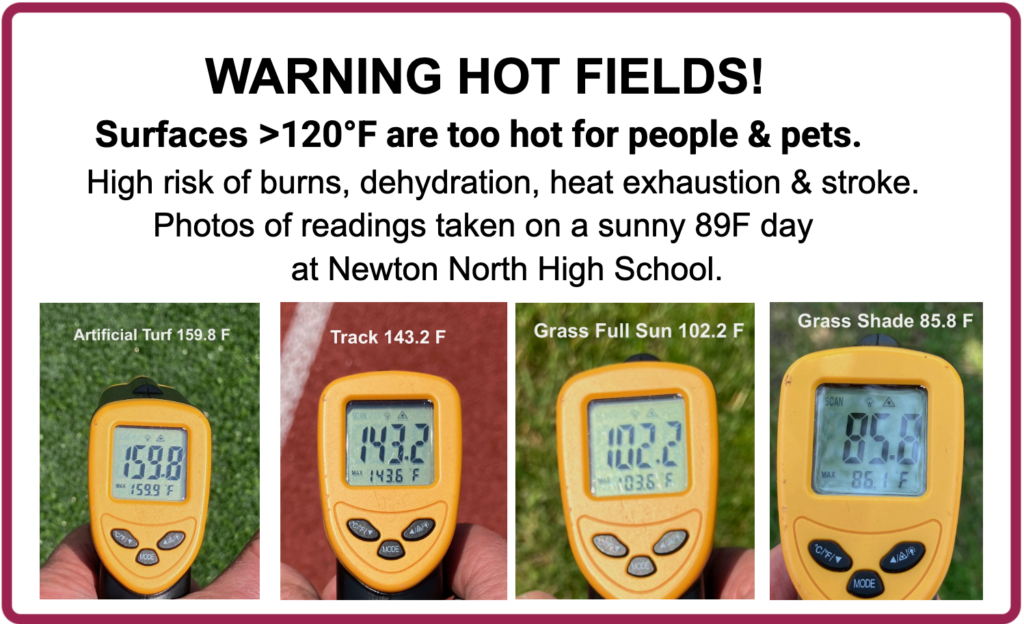
Heat Alert! Hot surfaces can burn paws. Direct sun can make asphalt, concrete pavement, poured-in-place rubber and artificial turf dangerously hot for people and especially for dogs.
You can test the sidewalk or other surface with the back of your hand. If you can’t tolerate the heat for at least 7 seconds, you know the pavement can cause your dog severe burns or blisters. It is safer to walk dogs on grass, dirt, and tree-shaded surfaces.
Using infrared thermometers, Mothers Out Front volunteers have measured sunny streets and sidewalks compared to tree shaded surfaces during several “heat island safaris.” At the recent Newton Highlands Village Day, the sunny asphalt street measured 120-135 degrees Fahrenheit compared to tree shaded areas that were 20-40 degrees cooler.
Last June, Newton residents Karen and Jon Slote measured the artificial turf under the play equipment at the Upper Falls Greenway Park near the water park where children were running barefoot. The artificial turf was 145 degrees compared to 97 degrees on the grass.
As heat waves become more frequent, surfaces that absorb and retain solar heat increase the risk of burns as well as the risk of heat exhaustion and heat stroke.
Trees help make outdoor spaces safer for people and pets by actively cooling the air as water evaporates from the leaves. In addition to many other benefits, shade trees near homes reduce air-conditioning costs. Umbrellas and canopies may block the sun but cover a smaller area and do not have the same cooling effect as trees. The temperatures of the surfaces under trees on Newton Centre Green measured about 20 degrees cooler than the asphalt surfaces under the canopies of the Newton Centre Plaza.