Newton’s summers are getting hotter so where our kids play matters more and more. That’s not just a comfort issue. On hot sunny days, the risk of heat stroke rises fast. Asphalt parking lots, cement sidewalks, sports fields and unshaded play areas absorb and retain solar heat. They create “heat islands” that are significantly hotter than more shaded areas.
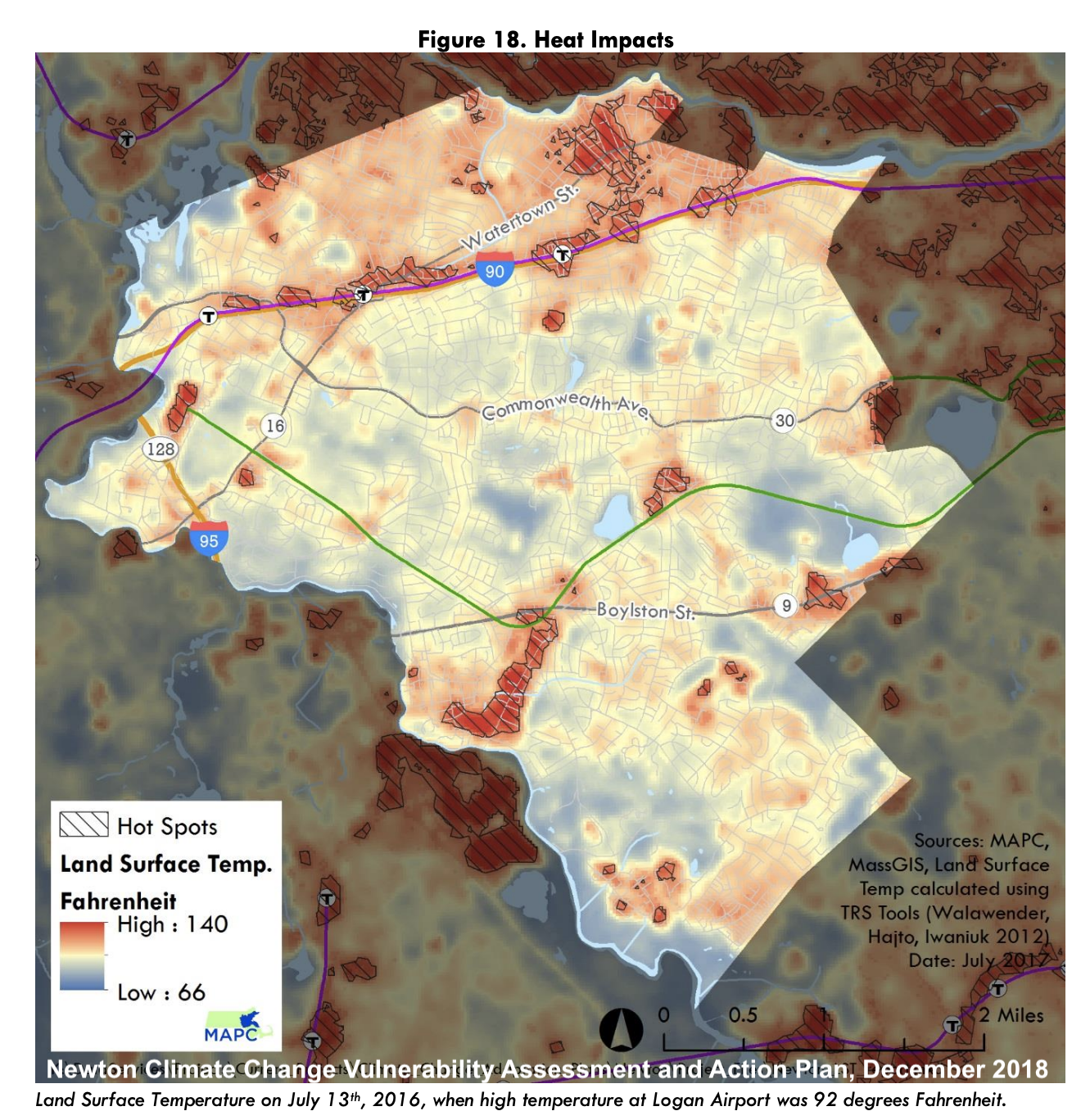
In Newton, there are several areas where extensive heat absorbent surfaces and the lack of trees for shade create heat islands—the Mass Pike corridor, Nonantum, and Upper Falls—making the conditions significantly hotter than neighborhoods with a higher percentage of shaded streets.
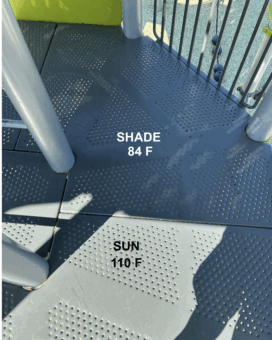
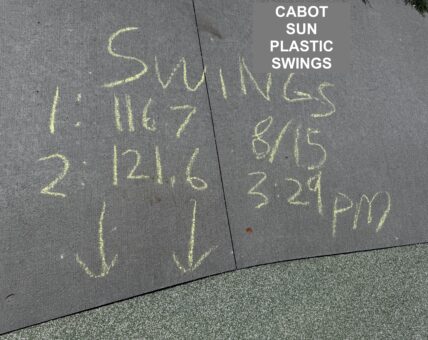
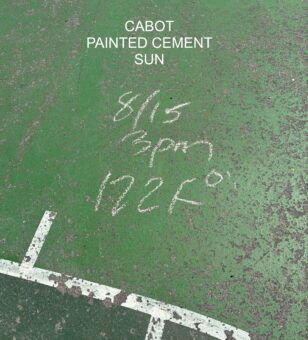
On August 15, Justin Shi, a fellow Green Newton Intern, and I joined Mothers Out Front volunteers for a “heat island safari” around Cabot Elementary School, Cabot Park, and Edmands Park. We measured and logged temperatures on turf, asphalt, concrete, grass, mulch, play areas and the playground equipment comparing temperatures in shade and sun. The pattern was clear: asphalt and poured-in-place rubber surfaces, and plastic slides and swings were hottest; tree-shaded areas and natural grass were the coolest. (Cabot Heat Island Data)
Our results showed the dangers. Even regular pavement isn’t harmless—we saw more than 120°F on the cement and asphalt around the Cabot playground. If a kid falls or a dog walks across that, it can burn skin and radiant heat pushes body temperature up.
So what should Newton teams, schools, and families do?
- Schedule smarter. Avoid the sun at midday. Plan activities at cooler times of day, mornings and evenings.
- Check field temperatures and consult heat advisory safety guidelines (Heat Safety Tips).
- Require frequent rest breaks in shade and plenty of water.
- Choose natural grass and tree-shaded areas for activities during peak-heat.
- Know the signs of heat illness.
- Have an emergency action plan and emergency supplies such as ice towels or ice packs.
- Support city and school “Hot Field” policies that require surface-temperature checks before practices, games and activities in the sun.
- Post signs that alert teachers, parents, coaches and camp counselors to adapt or even cancel activities when surfaces are too hot to play.
The heat is real, and it’s here. With smarter schedules, cooler surfaces, more shade, and clearer rules, kids can keep playing the sports we love—without a trip to the ER.
Charles He is a rising senior at Milton Academy and a Green Newton intern. He’s an activist for Environmental wellbeing and hopes to study environmental engineering and policy in college.